
When Sarah listed her 1970s colonial in Wilmington, she assumed the home itself would do the talking. The bones were solid, the kitchen recently updated, the lot half an acre. Yet after three weeks on the market with exactly one showing, she was frustrated. The problem wasn’t the house, it was the photographs.
She hired Luma 3 Productions to reshoot the listing. Two weeks later, after three new offers came in, she realized the difference. The same home looked completely different through professional lenses. Better lighting revealed details she thought were obvious in person. Wider angles showed space she didn’t know was worth emphasizing. The photographer even suggested staging adjustments she’d never considered.
This isn’t a fluke. It’s psychology. And understanding how real estate photography shapes buyer behavior isn’t just nice to know it’s essential if you’re selling a home in today’s market.
The Seven-Second First Impression: Why Photos Matter More Than You Think
Most home buyers today encounter your property first online. They’re scrolling through listings on their phone, laptop, or real estate app. You have roughly seven seconds to capture their attention before they swipe past your listing entirely.
Professional real estate photography wins that seven-second window. Here’s why: your smartphone camera, even a newer model, compresses three-dimensional space into a flat image. It captures what was actually in front of the lens, but it doesn’t capture what you felt when you stood in that room. Professional photographers do.
They use wider lenses to show room proportions without distortion. They position lighting to highlight architectural features: crown molding, fireplace details, hardwood grain. They time the shoot to catch golden hour light, which flatters walls and creates depth. And they know something most homeowners don’t: the angle of the shot changes how buyers psychologically perceive room size, light, and livability.
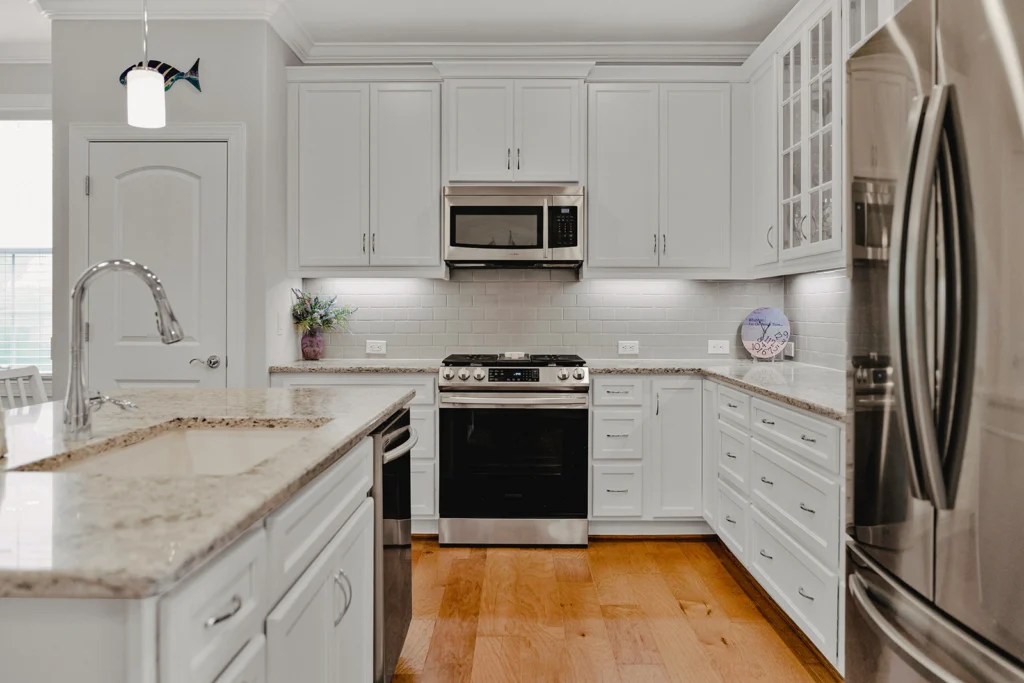
A master bedroom shot from the doorway (showing the full bed and windows) reads larger than the same room shot from the corner. A kitchen photographed with the sink and stove visible feels more functional than one that just shows cabinets. Buyers aren’t conscious of these spatial cues, but their brains absolutely are.
The Trust Factor: Why Professional Photos Signal Quality
There’s a phenomenon in real estate called the “halo effect.” It works like this: if the photos look polished and professional, buyers unconsciously assume the home itself is well-maintained. The reverse is also true: blurry, undersaturated, or awkwardly angled photos create immediate doubt, even if the home is in perfect condition.
This matters because buyers are already anxious. They’re making one of the largest financial decisions of their life. They want signals that the seller has cared for the property. Professional photography sends that signal immediately.
Think about how you shop online. Would you buy a product on Amazon if the photos looked like they were taken in bad lighting, cropped awkwardly, or were slightly out of focus? Probably not, even if the product itself is exactly what you need. Home buying isn’t that different. Buyers see unprofessional photos and wonder: “What else has the owner neglected?”
Professional real estate photography removes that friction. It says: “This owner respects this property enough to present it well.” That trust, built in the first seven seconds, makes buyers more likely to schedule a showing, spend time in the home, and imagine themselves living there.
The Listing Days Correlation: How Photos Impact Sales Speed
Real estate agents track a metric called “DOM” Days On Market. It’s how many days a listing sits before an offer is accepted. The national average in 2025 is around 32 days. In competitive markets like Wilmington, it can be lower.
Here’s what the data shows: homes photographed professionally sell 15–20% faster than homes with amateur photos, on average. That’s not anecdotal. That’s what real estate data companies track across millions of listings.
Why? Because professional photos generate more showings. More showings mean more offers. More offers mean faster negotiations and better closing chances.
The math is simple. A property that sits for 60 days instead of 45 days isn’t just slower—it costs money. You’re paying property taxes, insurance, and mortgage every single day. If you’re moving and carrying two properties, that’s expensive. Even if you’re not, a vacant home carries marketing costs. The longer a home sits, the more it erodes buyer confidence (why hasn’t someone bought this yet? Is there something wrong with it?).
Professional real estate photography shortens the timeline. It brings qualified buyers to showings faster because the photos accurately represent the property’s best self. Fewer surprises at the showing means more serious buyers.
Light, Angle, and Perception: How Photographers Shape Buyer Psychology
Walk into a room, and you see it 180 degrees. Your eyes adjust to shadows and bright spots. Your brain fills in details automatically. A camera captures only what’s directly in its lens, at the exposure it’s set to.
Professional photographers compensate for this using specific techniques:
Lighting Strategy
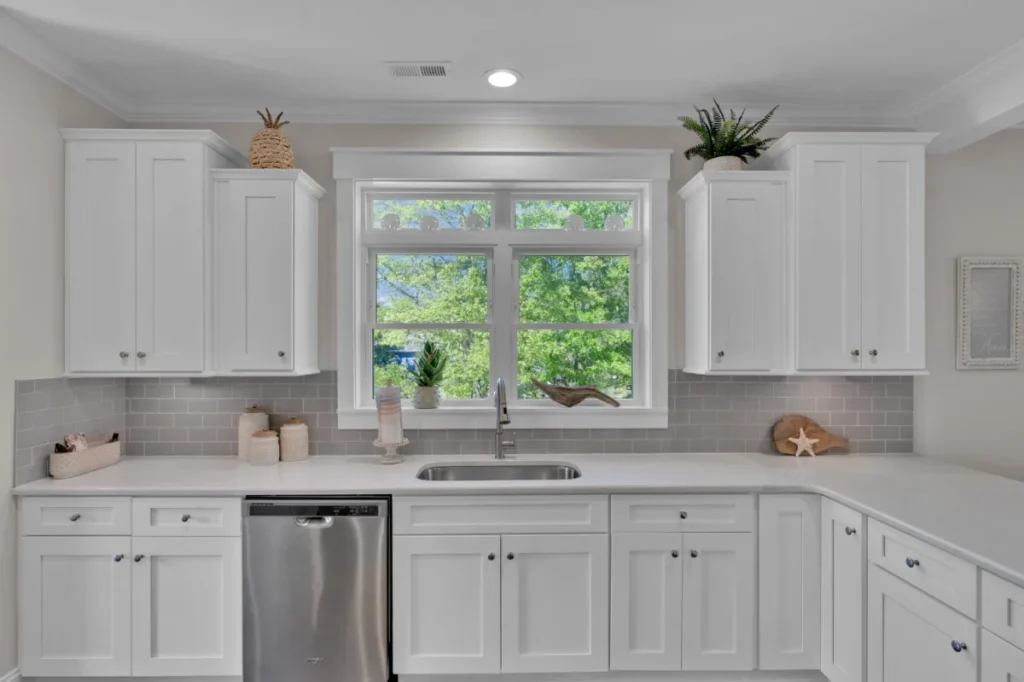
Photographers often arrive during golden hour roughly the first hour after sunrise or last hour before sunset when natural light is warm and directional. This light flatters everything: walls look warmer, windows glow, hardwood floors shine. Alternatively, they use strategic artificial lighting to fill shadows and balance the scene. An amateur taking a photo at 2 PM in flat midday light captures a space that looks harsh, dimensionless, and uninviting.
Wide-Angle Perspective
A 16mm or 24mm lens (wide angle) shows more of the room than a standard 50mm lens. This makes spaces feel larger, which is psychologically powerful. A buyer seeing a wide-angle shot of a living room thinks, “This is spacious.” They’re more likely to schedule a showing. The same room shot at standard focal length looks noticeably smaller.
Depth of Field
Professional photos often use a slight blur (shallow depth of field) in background elements to draw the eye toward the focal point, say, the beautiful fireplace or bay window. This directs buyer attention to the home’s best features rather than distracting clutter. Your phone camera, shooting everything in sharp focus, doesn’t create this visual hierarchy.
Staging Alignment
Before shooting, professional photographers often suggest (or work with an agent to execute) strategic staging. A bed positioned against the wrong wall reads smaller; moved to center the windows, it feels inviting. Bright throw pillows on a neutral couch draw the eye. A few well-placed pieces of furniture show space without overcrowding. These decisions, invisible to the untrained eye, profoundly shape how a room feels in photographs.
The ROI Reality: Does Professional Photography Actually Increase Sale Price?
The short answer: yes, but with caveats.
Studies from real estate data firms (including Zillow’s 2023 research) show that homes with professional photography sell for 5–15% more than those with amateur photos. Why? Because professional photos attract more serious buyers, which increases competition, which pushes price up.
Let’s ground this in a real scenario. You’re selling a home in Wilmington worth $350,000. A professional real estate photography shoot costs $300–800 depending on the property size. If those photos contribute to a 5% higher sale price, that’s an additional $17,500. Even at 3%, that’s $10,500. The ROI is immediate.
But here’s the honest caveat: photography alone doesn’t determine price. A beautiful photo of a structurally unsound home won’t sell it for more. Price is determined by market fundamentals—location, property condition, comparable sales, market temperature. What professional photography does is ensure your home reaches its market-driven ceiling price. It removes the invisible discount that amateur photos impose.
In other words: professional photography doesn’t make a $200,000 house sell for $350,000. But it might make a $350,000 house sell for $350,000 instead of $320,000, and in half the time.
The Emotional Connection: Buyers Buy Homes, Not Houses
There’s a psychological principle called “place attachment.” It means humans form emotional bonds with spaces. That bond forms faster when the space looks inviting, well-lit, and aspirational.
Professional real estate photography taps into this. Great photos don’t just show a kitchen, they show a kitchen where someone lives. Not because of furniture (though staging helps), but because the light, composition, and detail make the space feel real, lived-in, and desirable.
A buyer scrolling through listings and encountering a professionally photographed home suddenly starts imagining their morning coffee in that kitchen, their Thanksgiving dinner around that table, their kids playing in that backyard. That emotional projection is the first step toward an offer.
Comparing Approaches: Professional vs. DIY Real Estate Photography
It’s worth being honest about what DIY real estate photography looks like:
- Blurry or slightly out-of-focus images (especially in lower light)
- Color casts (the room looks too blue, too orange, or washed out)
- Distorted perspective (wide-angle distortion at the edges, or cramped framing)
- Harsh shadows under doorways or near windows
- Cluttered composition (too much stuff in the frame without visual hierarchy)
- Missing key details (photographer forgets to shoot the built-in shelves, the architectural feature that makes the home special)
Professional real estate photography eliminates all of this. The image is sharp, accurately colored, well-composed, and highlights what makes the property unique.
Staging and Photography: How They Work Together
The best professional photographers don’t just shoot what’s there they collaborate with agents and sellers to prepare the space. This isn’t about expensive furniture or décor. It’s about clarity.
Is there visible clutter? Remove it. Does the living room look empty? A single well-placed chair and throw can change the dynamic. Are there lights on during daytime photos? Turn them off (daylight reads better). Is a curtain in an awkward position? Adjust it.
Professional photographers often arrive early to review the space and make suggestions. A good photographer respects that they’re not a stylist or realtor, but they know what photographs well. This collaboration photographer plus agent plus seller creates the best results.
The Buyer Journey: Where Photography Fits
A typical home buyer’s journey looks like this:
- Online search (sees 8–15 listings per session)
- Shortlist (bookmarks 3–5 based primarily on photos)
- Research (reads reviews, checks comps, examines details in photos)
- Showing (visits 1–3 properties)
- Decision (makes an offer on 1)
Professional photography optimizes step 1 and step 3. Better photos mean your property is shortlisted instead of swiped past. Better photos during the research phase mean the buyer’s showings expectations align with reality, reducing the chance they back out during the home tour.
What to Expect From a Professional Real Estate Photography Shoot
If you hire a professional photographer like those at Luma 3 Productions, here’s what the process typically includes:
- Pre-Shoot Consultation. The photographer reviews the property, discusses your target market (first-time buyers, investors, families), and suggests staging adjustments. This might include removing personal items, opening curtains, decluttering counters, or adjusting furniture.
- Timing. Many properties are shot during golden hour for natural light flattery. Some photographers prefer shooting on overcast days if the home has east or west-facing windows that create harsh shadows.
- Multiple Angles. Each room is shot from 3–8 different angles to give variety and show spatial flow. Exterior shots often include curb appeal, driveway, backyard, and architectural details.
- Exterior Lighting. If shooting in the evening, exterior shots may use light painting or auxiliary lighting to illuminate landscaping, front facade, or key outdoor features.
- Editing. Post-production includes color correction, exposure balancing, and possibly sky enhancement (if the sky was blown out in the original shot). High-end retouching might include removing distracting objects or smoothing minor imperfections.
- Delivery. You receive a full gallery of professionally edited images, usually within 3–5 days. These are high-resolution versions suitable for any listing platform.
Your Photographs Are Your First Sale
Here’s the bottom line: your home’s first interaction with a potential buyer is almost always a photograph. That photograph has roughly seven seconds to convince someone that your property is worth their time, their money, and their future.
Professional real estate photography doesn’t misrepresent your home. It doesn’t add a room or hide a flaw. It simply shows your home the way a buyer would experience it at its absolute best, well-lit, well-composed, and clearly representing the space and lifestyle you’re selling.
In Wilmington’s competitive market, that difference translates to faster sales, more qualified showings, and often a higher final price. It’s not magic. It’s just professional photography doing what it was designed to do: help your home make a powerful first impression.
If you’re preparing to list in the Wilmington area and want photography that captures your property’s true appeal, consider reaching out to professionals who specialize in this craft. Your sale price and your timeline will thank you.
FAQ: Common Questions About Real Estate Photography
How many photos do I need for a listing?
Most listing platforms allow 24–36 photos. Aim for at least one high-quality shot per room plus exterior, driveway, and backyard. Quality matters far more than quantity. 25 great photos outperform 50 mediocre ones.
Can I use photos from my phone if I have a good camera?
Smartphone cameras have improved, but professional cameras offer wider dynamic range, better low-light performance, and manual controls that matter in real estate. Most agents recommend professional photography for the primary listing shots.
When should I schedule the shoot?
Schedule at least 1–2 weeks before your listing goes live. This allows time for any edits or reshoots. If the home is empty, shooting might be easier (no furniture to work around), but furnished homes often photograph better (they look lived-in and inviting).
What if the weather is bad on shoot day?
Most photographers reschedule for better conditions if possible. A professional knows that a gray, rainy exterior photo hurts a listing. That said, some photographers can work with overcast skies if the interior lighting is excellent.
How much does professional real estate photography cost?
In most markets, including Wilmington, expect $300–800 for a complete listing shoot. Luxury properties or properties requiring drone shots or virtual tours cost more. Most agents include photography in their listing package, so homeowners don’t bear the cost directly.
Should I hire a photographer or trust my real estate agent’s in-house shooter?
If your agent uses a professional photographer (not just snapping shots with an iPhone), quality is typically excellent. If you’re concerned about quality, ask to see samples of previous listings the photographer handled. Trust the portfolio, not assumptions.
Can drone photography boost my listing?
Drone shots of larger properties or homes with great landscaping can showcase views and lot size that ground-level photos can’t. However, they’re not essential for every property a small townhouse may not benefit. Discuss with your agent whether drone shots make sense for your home.
What about virtual tours?
Virtual 3D tours (interactive walkthroughs) are increasingly common and very effective for buyer engagement. They’re particularly valuable for out-of-state buyers or investors who can’t visit in person. Some photographers bundle these with photo packages; others charge separately.

