
If you’re selling a home in Wilmington, listing a beach cottage in Wrightsville, or marketing a commercial storefront downtown, the photos you use will decide whether your listing gets clicked or scrolled past. Buyers make snap judgments online long before they ever schedule a showing, and in a market as visually driven as coastal North Carolina, average photos quietly cost sellers money every single day their listing sits unnoticed.
That’s the gap Luma 3 Productions fills. We provide real estate photography services in Wilmington built specifically for how homes and commercial spaces actually sell here, not a generic package copied from a national franchise template. This guide walks through what real estate photography actually involves, what separates a listing that gets showings from one that doesn’t, and how to choose the right photography partner for your property.
Why Professional Real Estate Photography Actually Matters in Wilmington
Wilmington’s real estate market moves fast, but it’s also competitive. Between downtown historic homes, riverfront condos, and beach properties stretching from Carolina Beach to Wrightsville Beach, buyers have plenty of listings to compare in a single scroll. The listings that stand out are almost always the ones with clean, well-lit, properly composed photography.
A few realities worth knowing:
- Listings with professional photography consistently receive more online views than those with phone-shot or poorly lit images.
- Homes photographed well tend to spend fewer days on the market, since buyers arrive at showings already emotionally invested.
- MLS platforms and syndication sites like Zillow and Redfin compress and resize images automatically, which means poorly exposed or low-resolution photos degrade even further once uploaded.
- Coastal light in Wilmington shifts quickly, especially near the water, so timing a shoot around golden hour or overcast diffusion makes a measurable difference in image quality.
None of this is opinion. It’s simply how buyer psychology and platform mechanics work together. A skilled real estate photographer in Wilmington understands both sides: the art of the image and the technical requirements of the platforms it will live on.
What’s Included in Our Real Estate Photography Services
Every property is different, but most residential shoots follow a similar structure designed to capture a home at its absolute best.
Interior Photography
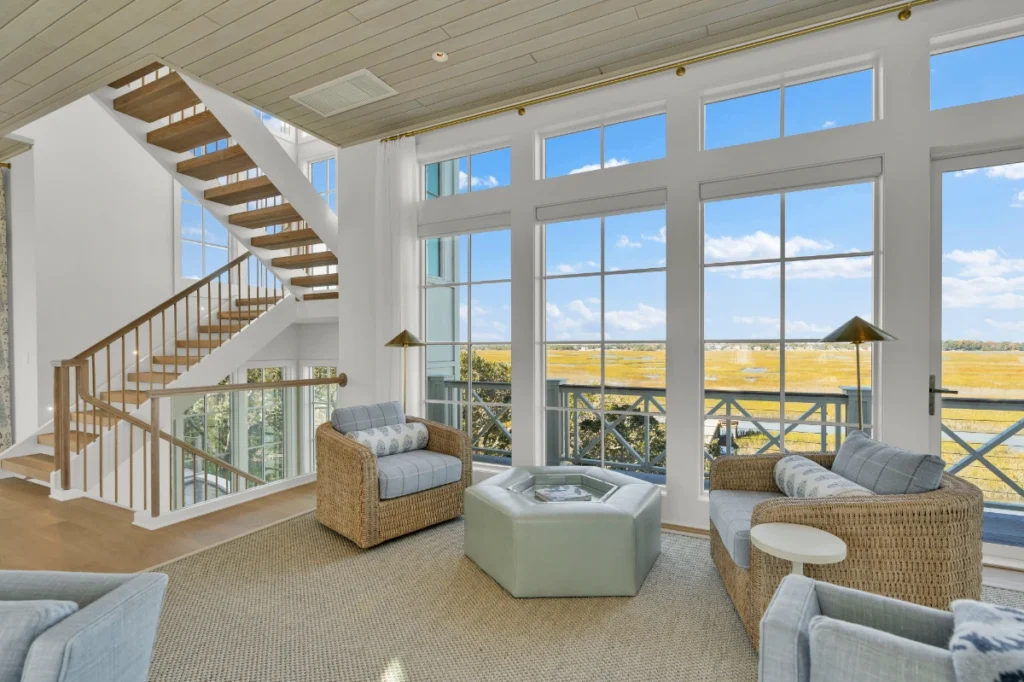
We shoot every primary living space, bedroom, bathroom, and kitchen using wide-angle lenses corrected for distortion, paired with HDR bracketing to balance window light against interior lighting. This avoids the two most common listing photo mistakes: blown-out windows and dark, moody rooms that hide detail.
Exterior and Curb Appeal Shots
The front exterior is often the single most important photo in a listing, since it’s usually the thumbnail buyers see first. We shoot exteriors during optimal light windows, factoring in Wilmington’s humidity and seasonal foliage, so the home reads as inviting rather than washed out.
Drone and Aerial Photography
For larger properties, waterfront homes, or lots with acreage, aerial imagery gives buyers context that ground-level shots simply can’t. Our drone operators fly under FAA Part 107 guidelines, which matters near Wilmington’s flight corridors and the airport’s controlled airspace. Not every property needs drone coverage, but for riverfront and beachfront homes it’s often the image that gets the most engagement.
Twilight Photography
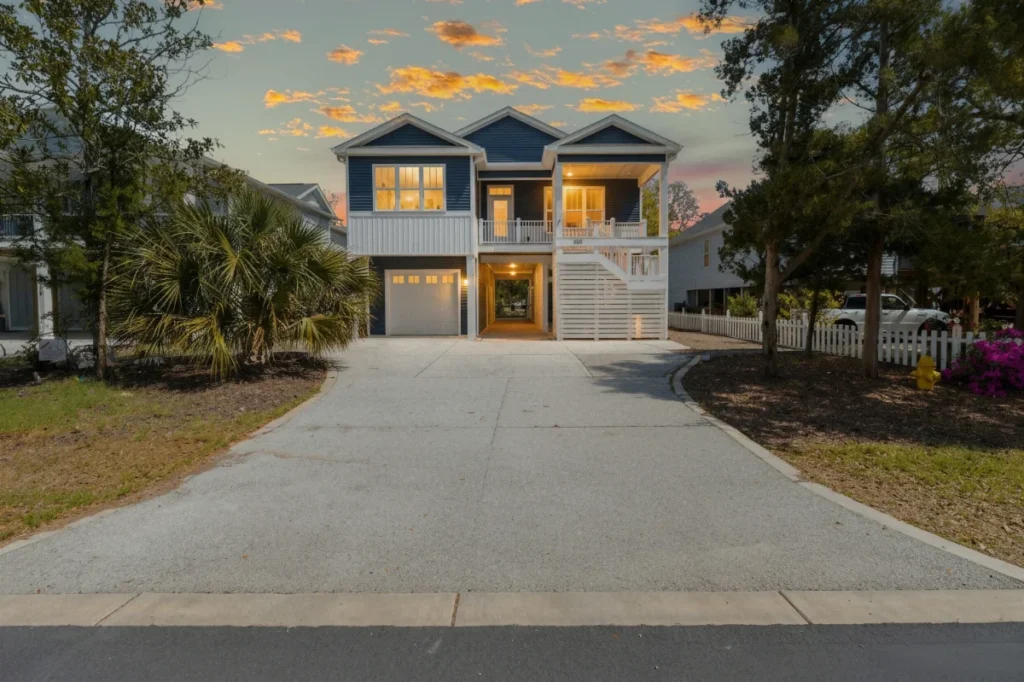
A twilight shot, typically one blended exterior image taken at dusk with interior lights glowing, has become a near-standard expectation for higher-end listings. It signals a premium property and is often the hero image agents lead with in marketing.
Video Walkthroughs and Social Media Clips
Short vertical video content built for Instagram Reels and TikTok has become a meaningful part of how younger buyers first discover listings. We shoot supplemental walkthrough footage that agents can repurpose across platforms without needing a separate videographer.
Commercial Real Estate Photography in Wilmington
Commercial properties are photographed differently than homes, and treating them the same is one of the more common mistakes in this industry. A retail space, office building, or mixed-use property needs to communicate function, scale, and usability, not emotional warmth.
Our commercial real estate photography in Wilmington covers:
- Exterior signage and storefront visibility shots, important for retail leasing
- Interior layout photography that shows usable square footage clearly
- Wide-format shots for office and warehouse spaces where scale matters more than styling
- Aerial photography for larger commercial parcels, industrial sites, and multi-tenant properties
- Twilight and evening shots for hospitality, restaurant, and retail spaces where ambiance drives leasing or sale decisions
Commercial listings often serve a more analytical buyer, brokers, investors, and business owners evaluating a space against specific criteria. Photography for this audience needs to be accurate, well-lit, and free of the kind of exaggerated wide-angle distortion that can misrepresent square footage. We calibrate our approach accordingly, prioritizing honest representation over dramatic composition.
The Shoot Process: What to Expect
A lot of hesitation around booking a photographer comes from simply not knowing what the process looks like. Here’s the honest rundown.
Before the Shoot
We ask for basic property details in advance: square footage, number of rooms, whether drone coverage is needed, and any specific features to highlight (a renovated kitchen, a dock, a view). For occupied homes, we send a short prep checklist covering things like clearing countertops, turning on all lights, and tucking away pets – small details that make a measurable difference in the final images.
During the Shoot
Most residential shoots take between 45 minutes and 90 minutes depending on square footage and whether drone or twilight coverage is included. We move room by room, adjusting lighting and staging small details (a crooked lampshade, an open cabinet) as we go, rather than fixing everything in editing afterward.
After the Shoot: Editing and Delivery
Raw images go through color correction, exposure balancing, lens distortion correction, and sky replacement when needed for exterior shots. Most residential galleries are delivered within 24 to 48 hours, which matters in a market where agents often want a listing live within days of the shoot.
How Pricing Works for Real Estate Photography in Wilmington
Pricing in this industry varies based on square footage, add-ons, and turnaround speed, and any photographer who quotes a flat number without knowing the property size isn’t giving you an accurate estimate. That said, most Wilmington-area shoots fall into a general structure:
- A base residential package covers standard interior and exterior photography for average-sized homes.
- Larger homes, typically above 3,000 square feet, usually cost more because they require more shoot time and produce more images.
- Drone photography, twilight sessions, and video walkthroughs are typically priced as add-ons rather than bundled by default, since not every listing needs them.
- Commercial shoots are usually quoted per project based on square footage, number of spaces, and whether video or aerial coverage is included.
If a photographer’s website only shows one flat price for every property, that’s often a sign the pricing isn’t actually tailored to your listing.
Choosing the Right Real Estate Photographer in Wilmington
Not every photographer who shoots homes is actually experienced in real estate photography specifically. It’s a different skill set from portraiture or events. Here’s what actually matters when vetting one:
- Portfolio consistency. One or two great photos in a portfolio means little. Look for consistent quality across an entire gallery, room after room, property after property.
- Turnaround time. In a fast-moving market, a 5- to 7-day turnaround can genuinely cost an agent showings. Ask upfront what delivery timelines look like.
- Equipment and licensing. Drone work should be handled by an FAA-licensed Part 107 operator, not an unlicensed hobbyist with a consumer drone.
- Local familiarity. A photographer who regularly shoots in Wilmington understands the light patterns near the river, the humidity’s effect on lens performance, and which neighborhoods photograph best at which time of day.
- Communication. Real estate timelines are tight. A photographer who responds quickly and books efficiently is often just as valuable as one with a slightly stronger portfolio.
Seasonal Considerations for Wilmington Listings
Wilmington’s climate affects shoot planning more than people expect. Spring and early summer bring lush landscaping but also unpredictable afternoon storms, so morning shoots tend to be more reliable. Late summer humidity can create haze in wide exterior and aerial shots, which is one reason many experienced photographers push commercial and drone shoots earlier in the day. Fall offers some of the clearest skies of the year, making it a strong window for twilight photography specifically. Winter, while quieter for showings, often produces the cleanest air quality for crisp exterior shots, something worth considering for listings that will stay active through the season.
Why Local Experience Changes the Outcome
A photographer flying in from out of the area, or working purely from a national franchise checklist, doesn’t know that a west-facing waterfront home in Wrightsville Beach needs a different shoot time than a shaded historic property downtown. They don’t know which streets lose light early because of tree canopy, or how salt air affects equipment on repeated coastal shoots. That local knowledge isn’t a marketing line; it directly shapes the quality of the final images. At Luma 3 Productions, every shoot is planned around Wilmington’s actual geography and light conditions, not a generic template applied the same way everywhere.
FAQ’s
How much does real estate photography cost in Wilmington, NC?
Pricing depends on square footage and add-ons like drone or twilight photography. Most residential shoots range from a base package for smaller homes to higher tiers for larger properties. Commercial shoots are quoted per project based on space size and scope.
How long does a real estate photography shoot take?
Most residential shoots take 45 to 90 minutes depending on home size and whether drone or twilight coverage is included. Commercial shoots vary more widely based on the number of spaces being photographed.
Do I need drone photography for my listing?
Not always. Drone photography works best for waterfront properties, homes with large lots, or listings where aerial context adds real value. Smaller in-town properties often don’t need it.
How soon will I receive my edited photos?
Most residential galleries are delivered within 24 to 48 hours after the shoot. Commercial and larger projects may take slightly longer depending on volume and editing complexity.
What’s the difference between residential and commercial real estate photography?
Residential photography focuses on emotional appeal and lifestyle. Commercial photography prioritizes accurate representation of space, layout, and scale for brokers and investors evaluating functional use.
Should I get twilight photos for my listing?
Twilight shots work especially well for higher-end or waterfront homes where ambiance matters. For standard listings, daytime photography alone is often sufficient.

